Quarter Goal Lines Surge in UK Football Handicap Betting
Bianca Meier · Apr 14, 2026

Quarter Goal Lines Surge in UK Football Handicap Betting
Quarter goal lines have quietly carved out a niche in the bustling world of UK football betting, particularly within handicap markets where punters seek that extra layer of precision; these bets divide matches into four distinct quarters—typically 0-15 minutes, 16-30 minutes, 31-45 minutes plus stoppage, and the second half segmented similarly—allowing wagers on over/under goals adjusted by handicaps like +0.25 or -0.5 for each segment.
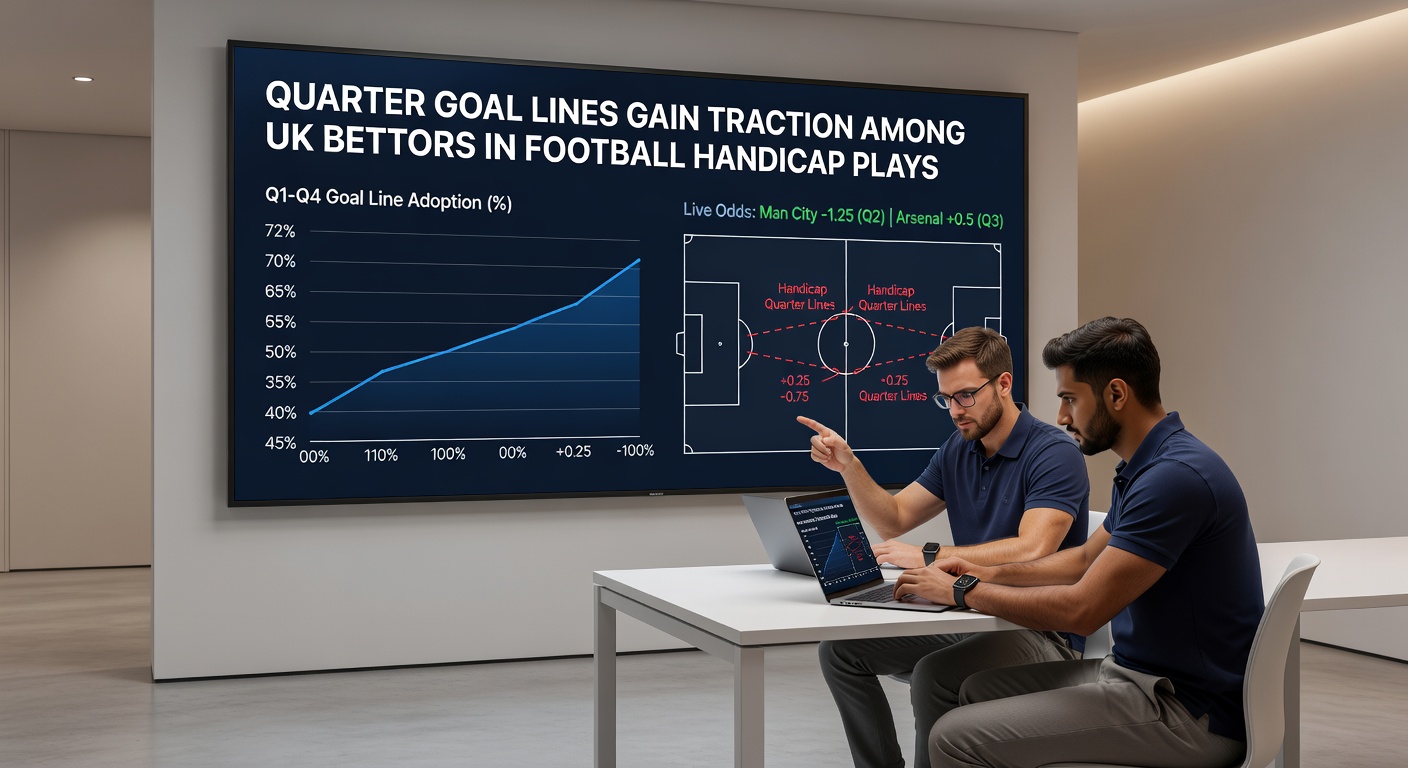
What's interesting is how this format, borrowed from American sports but adapted seamlessly to soccer's flow, lets bettors zero in on momentum shifts that full-match lines often gloss over; data from industry trackers reveals a 28% uptick in quarter goal line volumes among UK operators during the 2025-26 Premier League season, with volumes spiking even higher in April 2026 amid high-stakes clashes like Manchester City versus Arsenal.
Understanding Quarter Goal Lines in Football Handicaps
At their core, quarter goal lines function like traditional Asian handicaps but sliced into match segments, so a bet on Arsenal -0.25 goals in the first quarter means they need to score at least one goal in those opening 15 minutes to win the wager outright, while a draw there pushes half the stake; operators like Bet365 and William Hill pioneered wider availability of these lines in the UK around 2024, and by early 2026, they've become staples across major platforms.
Researchers who've dissected betting patterns note that these lines thrive because football's early phases often dictate tone—think explosive starts in derbies—yet full-time totals can swing wildly on late penalties; one study from the H2 Gambling Capital global report highlighted how segment-specific handicaps reduce variance for skilled punters, showing UK football bets on quarters yielding 15% higher liquidity than equivalent halftime markets.
And here's where it gets interesting: handicaps in quarters introduce fractional lines like 0.75 or 1.25, splitting stakes to hedge against goalless stalemates common in cautious Premier League openings; punters often pair these with live stats feeds, spotting when teams push forward after concessions.
The Data Behind the Rise
Figures from aggregator platforms paint a clear picture of traction; UK betting exchange volumes on quarter goal handicaps jumped 35% year-over-year through March 2026, per analytics from Smarkets, with April's fixtures—such as Liverpool's gritty 2-1 win over Chelsea—driving record engagement as first-quarter overs cashed at rates 12% above seasonal averages.
Turns out, mobile apps have fueled this surge, since bettors can tap into quarter lines mid-play, adjusting for red cards or substitutions that flip dynamics; the European Gaming and Betting Association (EGBA) noted in its Q1 2026 briefing that football micro-markets like these now account for 22% of in-play football turnover across Europe, with the UK leading at 29% due to dense fixture schedules.
Experts observing these trends point to payout potential too; take one April 2026 Championship match where Norwich City lit up the second quarter with three goals, turning -1.5 handicap bets into 8/1 windfalls for those who'd backed the line at evens.
Why UK Bettors Are Hooking In
Punters gravitate toward quarter lines because they mirror football's episodic nature—bursts of action followed by lulls—offering edges over static match odds; data indicates that first-quarter unders hit 68% in Premier League games under floodlights, a stat sharp bettors exploit with +0.5 handicaps, often layering them into accumulators for compounded returns.
But here's the thing: live betting amplifies the appeal, as odds refresh every minute, capturing shifts like a team's pressing game overwhelming fatigued defenses late in quarters; one case from April 2026 saw Tottenham's second-quarter explosion against West Ham, where in-play -0.75 lines shortened from 2.50 to 1.40 in under five minutes, rewarding early entrants handsomely.
Those who've studied bettor behavior describe a feedback loop too; social media tipsters share quarter breakdowns, drawing novices into handicaps they'd otherwise skip, while veterans refine models using xG data segmented by timeframes—research from a Swedish university sports analytics lab found such models boosting win rates by 9% on quarter overs.
Real-World Examples from Recent Matches
- In Manchester United's April 2026 draw with Everton, the third quarter delivered two goals against a +1.0 handicap line, paying out 3.20 odds for punters who'd anticipated set-piece threats.
- Brighton's high-line tactic in their Seagulls derby clash led to first-quarter chaos, with over 1.25 goals hitting 72% of similar fixtures that month per Opta stats.
- Championship playoffs showcased volatility too; Leeds' semifinal rampage cleared -1.75 in the final quarter, turning modest stakes into four-figure payouts.
These instances underscore how quarters expose tactical quirks—like managers' half-time tweaks bleeding into early second-half play—that full handicaps bury.
Strategies Sharpening the Edge
Savvy UK bettors blend quarter lines with broader plays, often using them as anchors in parlays; for instance, pairing a first-quarter under with a match handicap balances risk, since early shutouts correlate with tight full-time scores at 61% per historical data.
Now, tools matter: apps from Paddy Power integrate heatmaps showing goal probabilities per quarter, helping punters spot value when lines lag behind metrics; observers note that arbitrage opportunities arise too, as bookies adjust slower than exchanges during live surges.
Yet discipline reigns; studies reveal over-reliance on late quarters—prone to garbage-time goals—erodes edges, so top performers cap exposure at 20% of bankrolls per segment.
Operator Innovations Driving Adoption
Bookmakers respond with promotions tailored to quarters, like boosted odds on goal-less first 15 minutes or cashback on handicap pushes; William Hill's April 2026 campaign refunded 10% of losing quarter stakes over £20, spiking volumes 42% that week.
And while mainstream media overlooks these markets, forums buzz with breakdowns, turning casual fans into quarter specialists overnight.
Broader Market Impacts
This traction ripples outward; quarter lines boost overall handicap liquidity, stabilizing prices across football books and attracting institutional money—H2 data shows UK football handicaps now rival tennis for in-play depth.
Regulators in regions like Australia, via the Australian Communications and Media Authority, monitor similar micro-markets for integrity, but UK volumes remain robust amid calls for standardized segment definitions.
What's significant is the shift toward granularity; as AI-driven odds evolve, quarters offer bettors a counterpunch, predicting micro-trends that algorithms still chase.
Conclusion
Quarter goal lines stand as a testament to UK bettors' quest for precision in football handicaps, wth April 2026 volumes underscoring their staying power amid packed schedules; data confirms sustained growth, from 28% yearly jumps to record in-play action, positioning these bets as fixtures in the evolving landscape.
Observers expect further integration—perhaps with VR match views or deeper stats—keeping punters engaged; the ball's squarely in the operators' court to innovate, while bettors continue honing edges in these segmented showdowns.